
Pyroluria (Pyrrole Disorder): Symptoms, Diet, and Natural Support

What is Pyroluria (Pyrrole Disorder)?
Pyroluria — sometimes called pyrrole disorder — is considered a “hidden” condition by many functional and integrative health practitioners. It happens when your body produces too much of a compound called HPL (hydroxyhemopyrrolin-2-one). This byproduct can bind up important nutrients, especially zinc and vitamin B6, leaving less available for your body.

When these nutrients run low, a cascade of symptoms may show up, such as:
- Anxiety and mood swings
- Fatigue and poor stress tolerance
- Sensitivity to light, sound, or smells
- Digestive issues
- Joint discomfort or immune weakness
- Copper Imbalance aka Copper Toxicity
If left unchecked, pyroluria can contribute to deeper challenges like ADHD, depression, addictions, poor gut health or chronic health struggles.
How is Pyroluria Diagnosed? 🧪
Unlike standard blood work, testing for pyroluria usually involves:
- Urine testing for kryptopyrroles (HPL) Order HERE.
- Checking zinc and B6 levels
- Reviewing symptom patterns ( HTMA Hair Analysis is really helpful here!)
Because pyroluria is not universally recognized in mainstream medicine, diagnosis can vary depending on your practitioner. If you suspect pyroluria, it’s best to work with an integrative doctor, naturopath, or functional medicine practitioner (Me😉!).
Natural Treatment & Support Options 🌱
1. Nutrient Support
Since zinc and vitamin B6 are often depleted, supplementing these is the foundation of treatment. Other nutrients may also help, including:
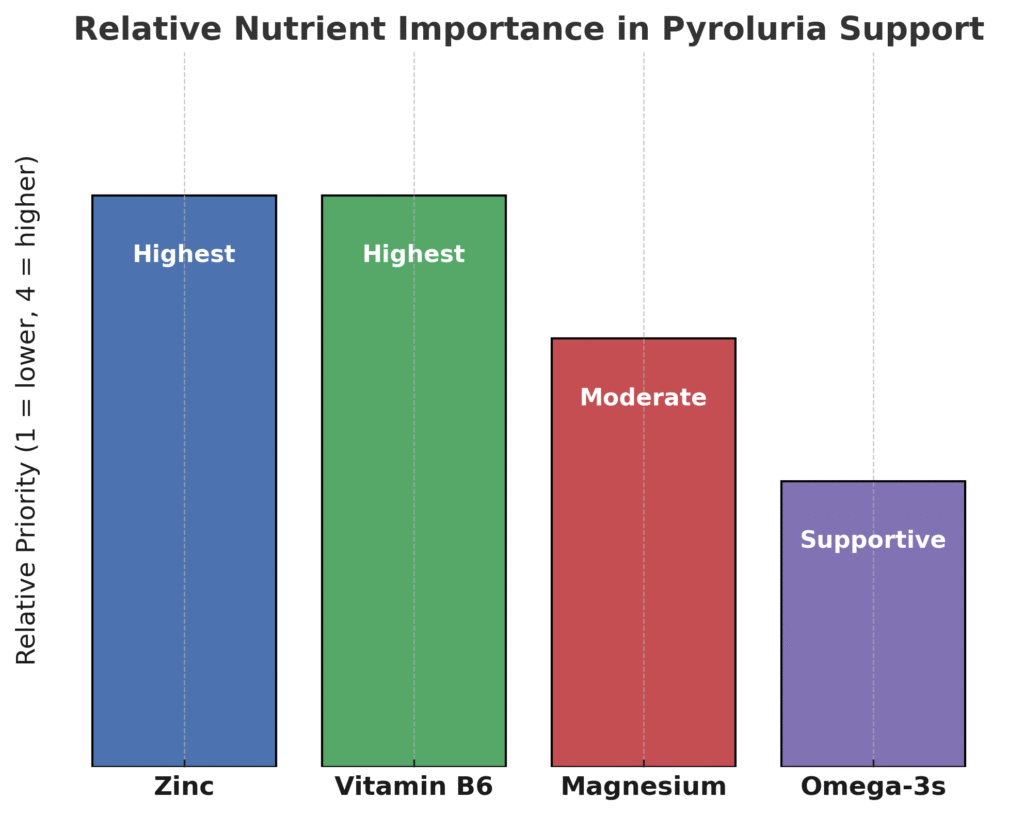
- Magnesium (calming mineral)
- Omega-3 fatty acids (reduce inflammation)
- Vitamin E, C, selenium (antioxidant support)
⚠️ Important: Supplementation should be guided by a professional to avoid overdosing.
2. Pyroluria Diet Recommendations
Supporting your body with nutrient-rich foods makes a big difference. A “pyroluria-friendly” diet includes:
✅ Best foods to eat:
- Wild-caught fish & seafood
- Pasture-raised meats & organ meats
- Nuts & seeds (pumpkin, sunflower, Brazil)
- Fresh vegetables (especially leafy greens)
- Healthy fats (avocado, olive oil, coconut oil)
❌ Foods to avoid:
- Gluten & processed wheat products
- Cow dairy (sometimes)
- Refined sugar
- Food additives, dyes, preservatives
- Processed & fried foods
Keeping blood sugar balanced with protein + veggies at every meal can also help reduce mood swings and energy crashes.
3. Lifestyle & Stress Support
- Practice stress reduction techniques (yoga, meditation, deep breathing).
- Prioritize gut health with probiotics, fermented foods, and fiber.
- Limit exposure to environmental toxins where possible.
- Aim for consistent sleep routines to restore balance.
Is Pyroluria Real? The Evidence
Research and clinical reports suggest many people with elevated pyrroles improve with targeted diet and nutrients. However, pyroluria is still not fully accepted in conventional medicine, and more studies are needed.
So, while skeptics remain, many people report life-changing improvements after addressing zinc, B6, and lifestyle imbalances.
Final Thoughts
If you suspect pyroluria, remember:
- Get tested with a knowledgeable practitioner.
- Focus on a nutrient-rich diet.
- Support stress & gut health.
- Consider zinc & B6 supplementation under guidance.
Healing takes time, but with the right support, many people notice improvements in mood, energy, and overall resilience.
Order Your Pyroluria Test Kit Today HERE!
Extra Pyroluria Support ✅ Order A HTMA Hair Analysis Test Kit HERE.
References 📚
Mensah Medical. Pyroluria (Pyrrole Disorder) Conditions Treated. Link
True Foods Nutrition. Pyroluria Diet Recommendations. Link
True Foods Nutrition. Pyroluria or Pyrrole Disorder: Diagnosis and Treatment. Link
Integrative Psychiatry. Pyroluria: A Hidden Cause of Addictions, ADHD, Anxiety and Other Afflictions. Link


