
Why Stress Disrupts Women’s Hormones More Than Men’s: The Science Behind Cortisol, Progesterone, and Mineral Balance

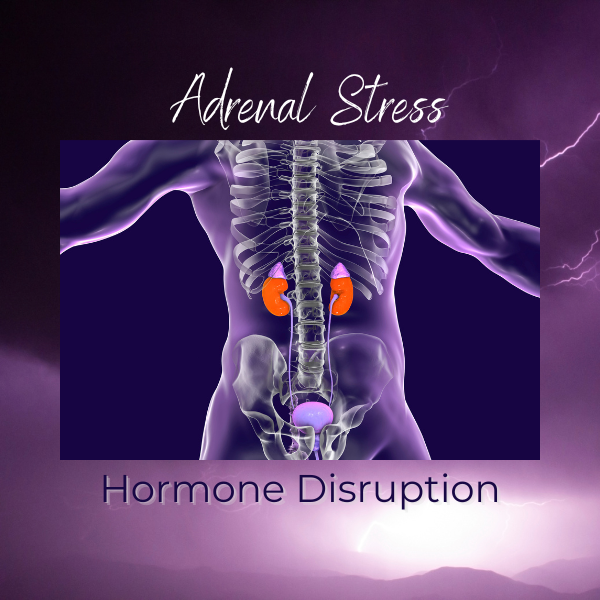
If you’ve ever wondered why women seem to experience more hormone-related changes from stress — irregular periods, fatigue, mood swings, or low libido — while men seem more “stable,” it’s not your imagination.
Men and women both experience stress through activation of the HPA axis (the hypothalamic–pituitary–adrenal stress response), but women’s hormonal systems are more complex, cyclical, and energy-sensitive — making them more vulnerable to cortisol’s effects.
Understanding this difference helps explain why women so often experience hormone imbalances during periods of stress — and why supporting adrenal and mineral health through HTMA (Hair Tissue Mineral Analysis) can make such a difference in restoring balance.
Take a look! ⬇
1. Hormonal Stability vs. Cyclic Complexity
One of the most fundamental differences between men’s and women’s endocrine systems lies in rhythm and regulation.
- Men’s hormones follow a fairly consistent 24-hour rhythm. Testosterone peaks in the morning and gradually declines through the day, but week to week, levels remain steady.
- Women’s hormones, however, rise and fall in a roughly 28-day cycle involving estrogen, progesterone, LH, and FSH — orchestrated by a delicate interplay between the hypothalamus, pituitary, ovaries, thyroid, and adrenal glands (often referred to as the HPO–HPT–HPA axis connection).
This multi-axis coordination makes women’s hormone balance exquisitely sensitive to both energy availability and stress load.
When chronic stress elevates cortisol, it can delay ovulation, shorten the luteal phase, and lower progesterone production, leading to irregular cycles, PMS, and anxiety.
2. The Pregnenolone Steal: When Stress Hijacks Reproductive Hormones
Both cortisol (your primary stress hormone) and sex hormones (estrogen, progesterone, testosterone) are synthesized from pregnenolone, often called the “mother hormone.”
When your body perceives stress — physical, emotional, or metabolic — it prioritizes survival over reproduction.
That means more pregnenolone is diverted toward making cortisol instead of sex hormones — a phenomenon known as the “pregnenolone steal.”
How this affects women:
- Reduced progesterone → Estrogen dominance
- Decreased DHEA → Fatigue, low libido, mood swings
- Suppressed ovulation → Infertility or cycle irregularities
How this affects men:
Men’s testosterone production is primarily testicular, regulated by luteinizing hormone (LH). Because their sex hormone synthesis relies less on adrenal precursors, men are less vulnerable to cortisol-driven hormone shifts.
🚨Women’s hormones are more sensitive to adrenal stress, while men’s systems are more compartmentalized and buffered.
3. Cortisol vs. Progesterone: The Hormone Tug-of-War
Under chronic stress, your body makes a simple (but costly) trade-off:
It diverts progesterone toward cortisol production, leaving estrogen unopposed.
This can create a state of estrogen dominance, which often shows up as:
- PMS and mood swings
- Heavy or irregular periods
- Breast tenderness and bloating
- Anxiety and disrupted sleep
Because progesterone is not only a reproductive hormone but also a calming neurosteroid, its depletion leaves many women feeling anxious, wired-but-tired, or emotionally reactive — especially in the luteal phase.
Meanwhile, men’s testosterone remains relatively stable, thanks to their straightforward feedback loop between the hypothalamus, pituitary, and testes.
4. Adrenal Function Plays a Bigger Role in Women — Especially After Menopause
Women rely heavily on adrenal function for hormone balance, especially after menopause, when the ovaries slow estrogen and progesterone production.
At that point, the adrenal glands become the main source of estrogen and testosterone precursors. If the adrenals are already taxed from chronic stress, mineral imbalances, or poor sleep, menopausal symptoms can intensify — from hot flashes and low libido to fatigue and anxiety.
In contrast, men continue to produce most of their testosterone in the testes throughout life, making their hormone balance less dependent on adrenal health.
5. Testosterone: A Built-In Stress Buffer
Testosterone itself is anabolic — it supports muscle repair, cognitive function, and resilience to stress.
Men’s naturally higher baseline testosterone acts as a buffer against cortisol’s catabolic (breakdown) effects.
Women depend more on progesterone for mood stability, calm, and restorative sleep — but under chronic stress, progesterone levels plummet as cortisol rises.
This is why so many women under long-term stress describe feeling “wired but tired,” anxious, or burned out — and often notice PMS or cycle changes at the same time.
6. The Modern Stress Load and Gender Differences
Beyond biology, women today face a heavier chronic stress burden than ever before.
Balancing careers, family, caregiving, emotional labor, and societal expectations often keeps cortisol chronically elevated.
Even low-grade, “background” stress signals the body that it’s unsafe to reproduce. Over time, this suppresses the HPO axis (hypothalamic pituitary ovarian axis), disrupts thyroid function, reduces fertility, and drains adrenal reserves.
Men’s simpler, testicular-driven hormone rhythm remains comparatively steady in the face of chronic stress — but women’s intricate endocrine network is far more reactive.
7. The Missing Link: Minerals and Adrenal Function
Here’s the part that’s often overlooked in hormone discussions:
Your adrenal glands can’t function without minerals.
Minerals like sodium, potassium, magnesium, copper, and zinc are the raw materials for enzyme systems that regulate:
- Cortisol production
- Thyroid conversion (T4 → T3)
- Estrogen detoxification
- Progesterone synthesis
- Blood sugar and electrolyte balance
Chronic stress depletes these minerals rapidly.
When your mineral reserves are low, the adrenals struggle to keep up — leading to fatigue, brain fog, salt cravings, and further hormone imbalance.
This is where HTMA (Hair Tissue Mineral Analysis) comes in.
🔍 8. Why HTMA Testing Is Foundational for Hormone Healing
HTMA provides a non-invasive, functional look at how your body uses and stores minerals over the past 1.5-2 months.
Unlike blood tests, which reflect what’s circulating short-term, HTMA reveals long-term mineral patterns — showing how stress, diet, and adrenal activity have shaped your internal environment.
Through HTMA, practitioners can identify:
- Adrenal fatigue or burnout patterns (high or low sodium/potassium ratios)
- Copper or calcium dominance impacting estrogen metabolism
- Magnesium deficiency contributing to anxiety or PMS
- Imbalances that block thyroid hormone conversion
By addressing these underlying mineral patterns, women can rebuild resilience, restore adrenal function, and finally give their hormones a steady foundation.
⚡Final Thoughts
Men’s hormones are linear, stable, and primarily governed by the testes and daily rhythms.
Women’s hormones are cyclical, interdependent, and governed by multiple glands — all of which rely on energy availability and mineral balance.
That’s why stress hits women’s hormones harder and faster, leading to fatigue, estrogen dominance, thyroid shifts, and mood fluctuations.
Balancing hormones isn’t just about supplements or cycle tracking — it starts with restoring the mineral foundation your body depends on.
✨ When minerals are balanced, hormones can finally find their rhythm again.
Key Takeaways:
- Chronic stress elevates cortisol, which disrupts ovulation and lowers progesterone.
- Women’s cyclical hormones make them more sensitive to energy and mineral depletion.
- HTMA testing helps uncover the mineral imbalances driving adrenal and hormonal dysfunction.
- Replenishing key minerals supports adrenal resilience, thyroid health, and balanced cycles.
🔗 Test Today!
- Balance minerals and hormones with HTMA Hair Tissue Mineral Analysis.
- Support gut health with GI Map testing.
- Support hormone balance with DUTCH testing.


