
Copper Toxicity & Insulin Resistance

Is Too Much Copper Messing with Your Blood Sugar?
When people talk about insulin resistance or blood sugar problems, the usual culprits are poor diet, lack of exercise, or carrying extra weight. But there’s another piece to the puzzle that many overlook: minerals. One mineral in particular, copper, is essential for health in the right amounts, but too much can throw your system off balance and contribute to insulin resistance.
♦
What Copper Does for the Body?
Copper plays a role in making energy, supporting the brain and nerves, building connective tissue, and helping the body use iron. In normal amounts, it’s a helpful nutrient. But when copper builds up in the body, it can shift from being supportive to being harmful, especially for metabolism.
♦
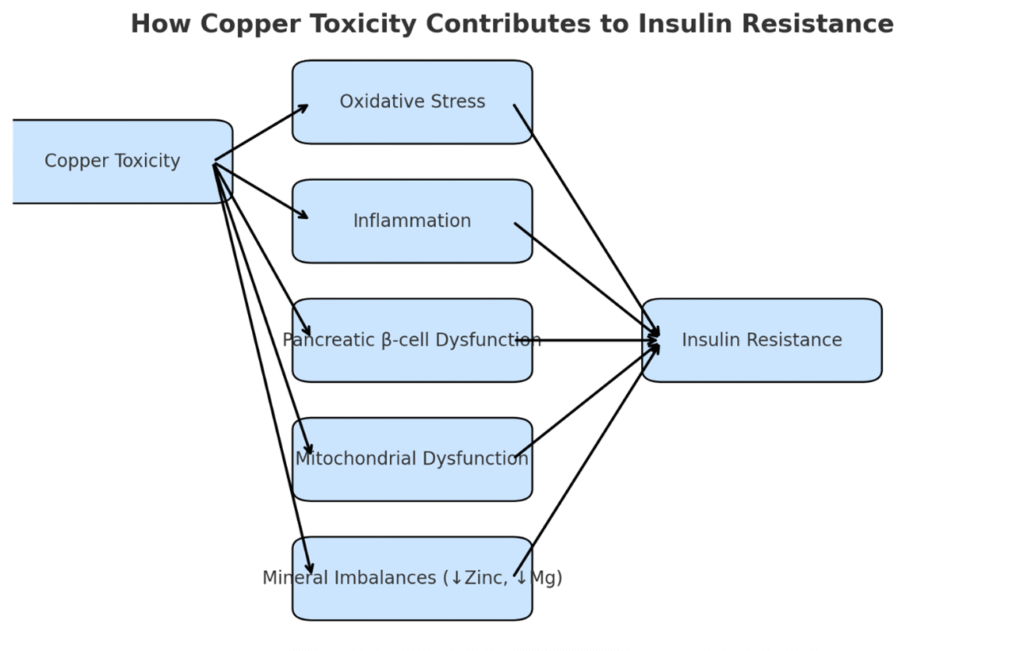
How Too Much Copper Can Lead to Insulin Resistance
1. Stress on the Body (Oxidative Stress)
Too much copper can create unstable molecules called free radicals. These damage cells, including the insulin receptors that help sugar get into your cells for energy.
2. Inflammation
High copper can trigger ongoing, low-level inflammation. Inflammation makes it harder for insulin to work the way it should.
3. Pancreas Struggles
The pancreas, which makes insulin, needs zinc to do its job. Since copper and zinc work against each other, too much copper can mean too little zinc. This makes it harder for the pancreas to manage blood sugar.
4. Low Energy Production
Extra copper can slow down the mitochondria (your cells’ “power plants”). If cells can’t turn sugar into energy efficiently, they become less responsive to insulin.
5. Other Mineral Imbalances
Copper overload often comes with low zinc and magnesium, which are both vital for keeping blood sugar in check.
♦
Why This Matters
Copper toxicity isn’t the main cause of insulin resistance, but it can be a hidden factor for some people. Extra copper may come from drinking water through copper pipes, using copper cookware, supplements, or even certain birth control methods like a copper IUD. Women may be more sensitive because of hormonal changes that affect how the body handles copper.
♦
What You Can Do
If you suspect copper overload, testing your mineral levels through HTMA – hair analysis can help. Supporting your liver, getting enough zinc and magnesium, and reducing sources of excess copper like birth control, copper water piping, or vegan/vegetarian diet may all play a role in restoring balance.
♦
Final Thoughts: Copper is essential, but too much of it can get in the way of insulin working properly. By keeping minerals in balance, you can support healthier blood sugar control and better overall well-being.


